

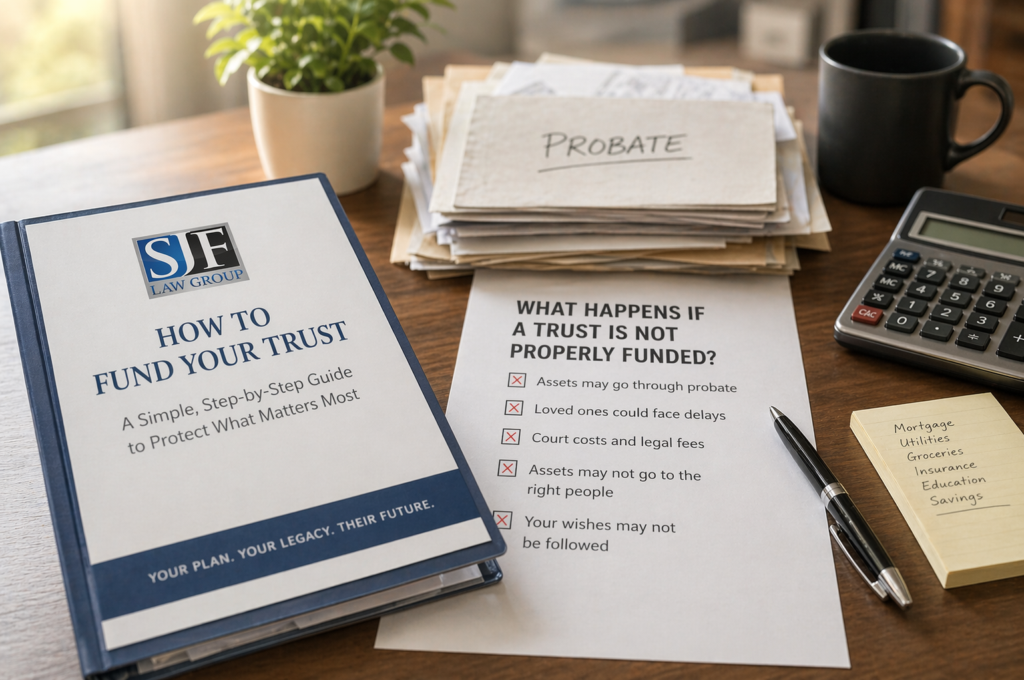
The Costly Mistake That Can Send Your Family Straight to Probate
You created a living trust. You signed the documents. You felt relief knowing your family would avoid probate and unnecessary stress.
But here’s the reality most people never hear:
If your trust is not properly funded, it may be completely worthless.
This is one of the most common and most dangerous estate planning mistakes. Families believe they are protected, only to discover too late that their assets were never actually placed into the trust.
This article explains what happens when a trust is not funded, why it fails, and how to fix it before it’s too late.
Watch the Video: What Happens If a Trust Is Not Properly Funded?
In this video, you’ll learn:
- What “funding a trust” actually means
- The biggest mistakes families make
- Why unfunded trusts fail
- How to properly fund your trust step-by-step
Quick Answer
If a trust is not properly funded, it controls nothing.
That means:
- Your assets may still go through probate
- Your estate plan may be ignored
- Your beneficiaries may lose protections
- Your family may face court involvement and delays
The Biggest Misconception About Living Trusts
Many people believe:
“I signed my trust, so I’m protected.”
That’s only step one.
A trust is like an empty container. If you don’t transfer assets into it, it has no authority over anything.
What Does “Funding a Trust” Mean?
Funding a trust means transferring ownership of your assets into the name of the trust.
Instead of:
- John Smith owning an account
It becomes:
- John Smith, Trustee of the John Smith Revocable Living Trust
You still control everything, but legally, the trust owns the assets.
What Happens If You Don’t Fund Your Trust?
1. Your Estate Goes Through Probate Anyway
One of the main reasons people create a trust is to avoid probate.
But if assets are still in your personal name:
- They must go through probate
- The process becomes public
- It can take months or years
- Costs increase significantly
In many cases, probate costs more than the original estate plan.
2. Your Wishes May Be Ignored
Your trust only controls assets that are actually inside it.
If an asset is not transferred:
- The trust rules do not apply
- The asset may pass through your will or state law
Real Risk
An asset could go to the wrong person entirely.
Example:
- You intended to divide property among children
- But ownership structure sends it to only one person
This often leads to family conflict and litigation.
3. Asset Protection Fails
Many trusts include protections such as:
- Creditor protection
- Divorce protection
- Spendthrift provisions
But if assets never enter the trust:
Those protections never activate.
Your beneficiaries may receive assets:
- Exposed to lawsuits
- Vulnerable in divorce
- Unprotected from creditors
4. Your Incapacity Plan Breaks Down
A properly funded trust allows a successor trustee to step in if you become incapacitated.
Without funding:
- They have no authority over your assets
- Your family may need court intervention
- A guardianship or conservatorship may be required
This defeats one of the most important benefits of a living trust.
A Real-World Risk Scenario
A parent creates a trust leaving a home to three children equally.
But:
- The home is never transferred into the trust
- One child is added to the deed for convenience
After death:
- That child becomes the sole owner
- The other children receive nothing
Even though the trust says otherwise.
How to Properly Fund Your Trust
The good news: this problem is fixable.
Funding your trust simply means updating ownership and beneficiary designations.
1. Real Estate
- Prepare a new deed
- Transfer property into the trust
- Record with the county
2. Bank and Investment Accounts
- Contact financial institutions
- Provide trust documentation
- Retitle accounts in the trust name
3. Personal Property
- Use a General Assignment of Property
- Transfer items like furniture, jewelry, etc.
4. Life Insurance and Retirement Accounts
Do NOT change ownership.
Instead:
- Update beneficiary designations
- Name the trust as primary or contingent beneficiary (if appropriate)
5. Business Interests
- Transfer ownership of LLCs or shares
- Update operating agreements if needed
Free Guide: How to Properly Fund Your Trust (Step-by-Step Checklist)

Understanding how to fund your trust is one thing, but actually doing it correctly is another.
To make this easier, we’ve created a free step-by-step Trust Funding Checklist you can use to review your assets and ensure everything is properly aligned with your estate plan.
Download the checklist here.
Common Trust Funding Mistakes
- Forgetting to fund the trust entirely
- Missing assets (like a second property or brokerage account)
- Failing to update new accounts
- Not coordinating beneficiary designations
Even high-profile estates have made these mistakes.
Key Takeaways
- A trust without funding has no power
- Unfunded assets go through probate
- Your estate plan may not be followed
- Asset protection and incapacity planning can fail
- Proper funding is essential to make your plan work
When to Speak With an Estate Planning Attorney
Creating a trust is only the beginning. Making sure it actually works is what matters.
At SJF Law Group, our attorneys bring advanced degrees and deep tax expertise to help clients:
- Properly fund and structure trusts
- Align all assets with the estate plan
- Avoid probate and court involvement
- Protect beneficiaries and long-term wealth
If you already have a trust, it’s critical to confirm it’s fully funded.
Schedule a consultation today to ensure your plan is complete, effective, and fully protects your family.
Frequently Asked Questions (FAQ)
What does it mean to fund a trust?
It means transferring ownership of your assets into the trust so it can control them.
What happens if I don’t fund my trust?
Your assets may go through probate, and your trust may not be followed.
Does a will fix an unfunded trust?
Not completely. A will may still require probate, which defeats the purpose of the trust.
Should all assets go into a trust?
Most should, but some (like retirement accounts) should be handled through beneficiary designations.
How often should I review my trust funding?
Regularly, especially after acquiring new assets or major life changes.