

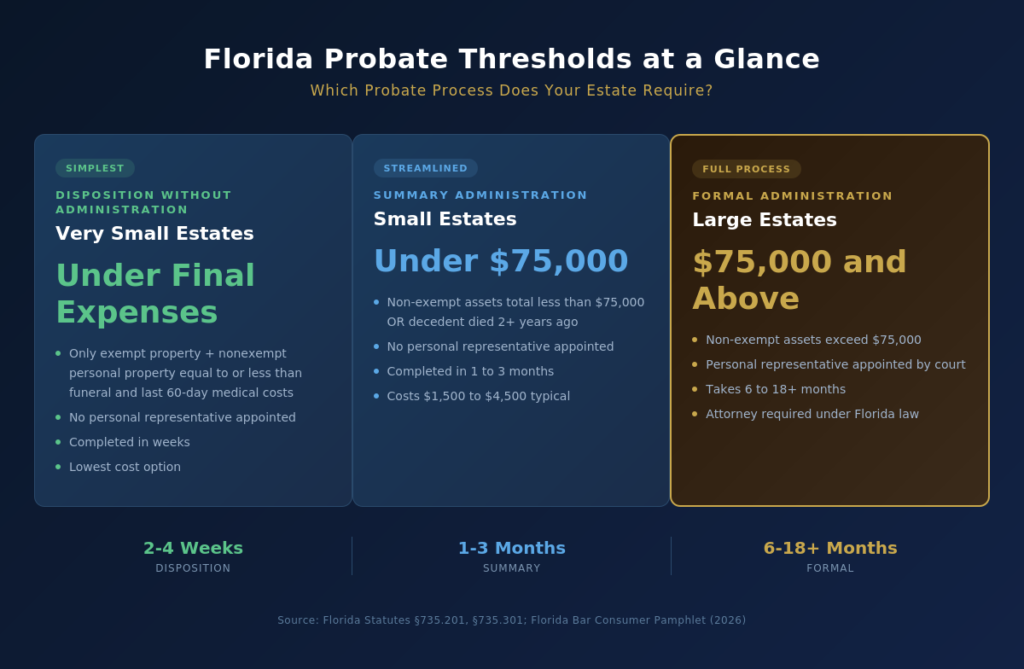
Figure 1: Florida Probate Thresholds at a Glance
Key Takeaways
Florida law sets specific estate value thresholds that determine which type of probate process applies. Here are the essential points:
- The $75,000 threshold is the key dividing line. Estates with non-exempt assets under $75,000 qualify for summary administration. Estates above $75,000 require formal administration with full court oversight.
- Florida has no state estate tax. The Florida Constitution prohibits state estate and inheritance taxes. Federal estate tax applies to estates over $15 million per person (2026, and indexed for inflation).
- Exempt assets do not count toward the $75,000 limit. Homestead property, up to two vehicles, and household furnishings up to $20,000 are excluded from the calculation.
- Summary administration takes 1 to 3 months and costs significantly less than formal probate, which takes 6 to 18 months or longer.
- Many assets skip probate entirely. Joint accounts, life insurance with named beneficiaries, retirement accounts, and trust assets transfer outside of court.
- Formal administration requires an attorney. Florida law mandates legal representation for formal probate. Attorney fees follow a statutory schedule based on estate value. However, Florida Statute §733.6171 provides a presumed reasonable fee schedule, but it is not mandatory. Attorneys and personal representatives may agree to a different fee, and courts may adjust fees based on the circumstances.
- Strategic planning reduces or eliminates probate. Trusts, Lady Bird deeds, beneficiary designations, and joint ownership keep assets out of court.
- A will alone does not avoid probate. Every will must go through the probate court for validation before assets transfer.
Introduction
One of the most common questions families ask after losing a loved one is: Does this estate need to go through probate? The answer depends on the value, type, and titling of the assets involved.
In Florida, the estate value threshold for formal probate is $75,000 in non-exempt assets. Below that number, families have access to faster and less expensive alternatives. Above it, the estate enters formal administration with court supervision, mandatory creditor notice periods, and attorney involvement.
This guide breaks down the specific dollar thresholds, the three types of probate available in Florida, which assets count (and which do not), what the process costs, and how to reduce or avoid probate through smart estate planning.
For families managing large probate estates in Florida, understanding these thresholds is the first step toward protecting your time, money, and family relationships.
What Is the Probate Threshold in Florida?
Florida Statute §735.201 sets the probate threshold at $75,000. This number refers to the total value of non-exempt probate assets, not the total value of everything the decedent owned.
Estates with non-exempt assets at or below $75,000 qualify for summary administration, a simplified process with less court involvement. Estates above $75,000 require formal administration, the standard court-supervised probate process.
The distinction matters because summary administration is faster, cheaper, and requires less paperwork. Formal administration demands an appointed personal representative, mandatory creditor notification, and a minimum of six months to complete.
Once you’ve confirmed an estate needs to go through probate, it helps to know what the estate administration process actually involves from start to finish.
How Do You Calculate the $75,000 Threshold?
Start with the total value of all assets the decedent owned in their name alone. Then subtract the value of exempt property. The remaining figure is what counts toward the $75,000 threshold.
Under Florida Statute §732.402, exempt property includes:
- Homestead property (the decedent’s primary residence)
- Up to two motor vehicles under 15,000 pounds each, used regularly by the decedent or immediate family
- Household furniture, furnishings, and appliances up to $20,000 in net value
- Qualified tuition programs (529 plans) under IRS Code Section 529
Example: A decedent owned a homestead worth $400,000, one car worth $25,000, household goods worth $15,000, and a bank account with $60,000. The homestead, car, and household goods are all exempt. Only the $60,000 bank account counts toward the threshold. This estate qualifies for summary administration because $60,000 is below $75,000.
Not everything counts toward that threshold — some assets, like homestead property, are exempt from probate altogether.
What Are the Three Types of Probate in Florida?
Florida law provides three distinct probate paths based on estate size and circumstances.
| Feature | Disposition Without Administration | Summary Administration | Formal Administration |
| Estate Threshold | Assets less than final expenses | Non-exempt assets under $75,000 | Non-exempt assets $75,000+ |
| Timeline | 2 to 4 weeks | 1 to 3 months | 6 to 18+ months |
| Personal Representative | Not required | Not required | Required by court |
| Attorney Required | No | Recommended | Yes (Florida law) |
| Creditor Notice | Not required | Optional (recommended) | Mandatory (90 days) |
| Typical Cost | Under $500 | $1,500 to $4,500 | $3,000 to $15,000+ |
| Court Supervision | Minimal | Limited | Full oversight |
Figure 2: Comparison of Florida Probate Types
What Is Disposition Without Administration?
This is the simplest option, reserved for the smallest estates. Under Florida Statute §735.301, it applies when the estate contains only:
- Personal property exempt from creditor claims
- Nonexempt personal property worth less than the combined total of funeral expenses and final 60-day medical bills
The process involves a single informal application to the court. No personal representative is appointed. The court authorizes distribution directly to entitled parties.
What Is Summary Administration?
Summary administration under Florida Statute §735.201 is available when:
- The estate’s non-exempt assets total $75,000 or less, OR
- The decedent died more than two years ago (regardless of estate value)
The two-year rule is significant. When a decedent died more than two years ago, all creditor claims are barred under Florida’s two-year nonclaim provision. This opens summary administration to estates of any size, as long as two full years have passed since the date of death (Henderson Franklin, June 2025).
Summary administration does not require a personal representative. A petition is filed with the circuit court, interested parties are served notice, and the court issues an order distributing assets directly to beneficiaries.
What Is Formal Administration?
Formal administration is the standard, full probate process required for estates that exceed the $75,000 non-exempt asset threshold. The court appoints a personal representative who manages the estate under judicial supervision.
The process includes filing a petition, serving notice of administration to beneficiaries, publishing notice to creditors, filing an inventory, paying debts, filing a final accounting, and distributing assets.
Florida law requires an attorney for formal administration (Florida Probate Law Group, January 2026). The minimum timeline is six months due to the mandatory creditor notification period.
Which Assets Count Toward the Probate Threshold?
Only assets titled solely in the decedent’s name, without a beneficiary designation or survivorship provision, count toward the $75,000 threshold. Non-probate assets and exempt assets are excluded.
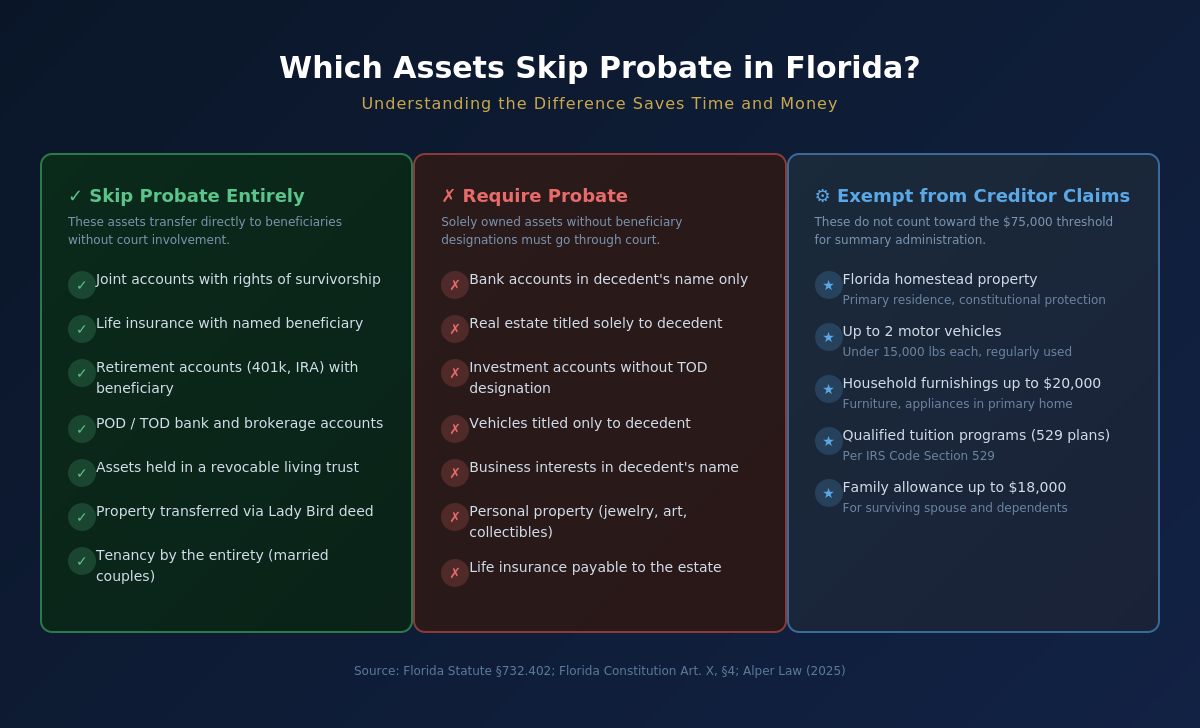 Figure 3: Which Assets Skip Probate vs. Require Probate in Florida
What Assets Are Exempt from Creditor Claims?
Florida provides strong protections for certain property categories. Under the Florida Constitution Article X, Section 4 and Florida Statute §732.402, the following are exempt from creditor claims and do not count toward the $75,000 threshold:
- Homestead property: The decedent’s primary residence receives constitutional protection from forced sale and most creditor claims. The homestead exemption is one of the strongest asset protections in the country.
- Motor vehicles (up to 2): Two vehicles under 15,000 pounds each, regularly used by the decedent or immediate family members.
- Household furnishings: Furniture, appliances, and belongings in the primary home up to $20,000 in net value.
- Qualified tuition programs: 529 plans and similar programs authorized under the Internal Revenue Code.
The surviving spouse or children are entitled to receive these exempt assets before any creditor claims are paid (Alper Law, April 2025).
What Assets Skip Probate Entirely?
Certain assets transfer directly to beneficiaries without entering the probate process at all. These non-probate assets include:
- Joint accounts with rights of survivorship
- Life insurance policies with a named beneficiary
- Retirement accounts (401(k), IRA) with a named beneficiary
- Payable-on-death (POD) bank accounts
- Transfer-on-death (TOD) brokerage accounts
- Assets held in a revocable living trust
- Real property transferred via Lady Bird deed
- Property held as tenancy by the entirety between spouses
If a beneficiary designation is missing, expired, or names the estate as beneficiary, the asset falls back into the probate estate and counts toward the $75,000 threshold.
How Much Does Probate Cost in Florida?
The cost of probate depends on the type of administration, the estate’s value, and the complexity of the assets involved. Attorney fees for formal administration follow a statutory schedule under Florida Statute §733.6171.
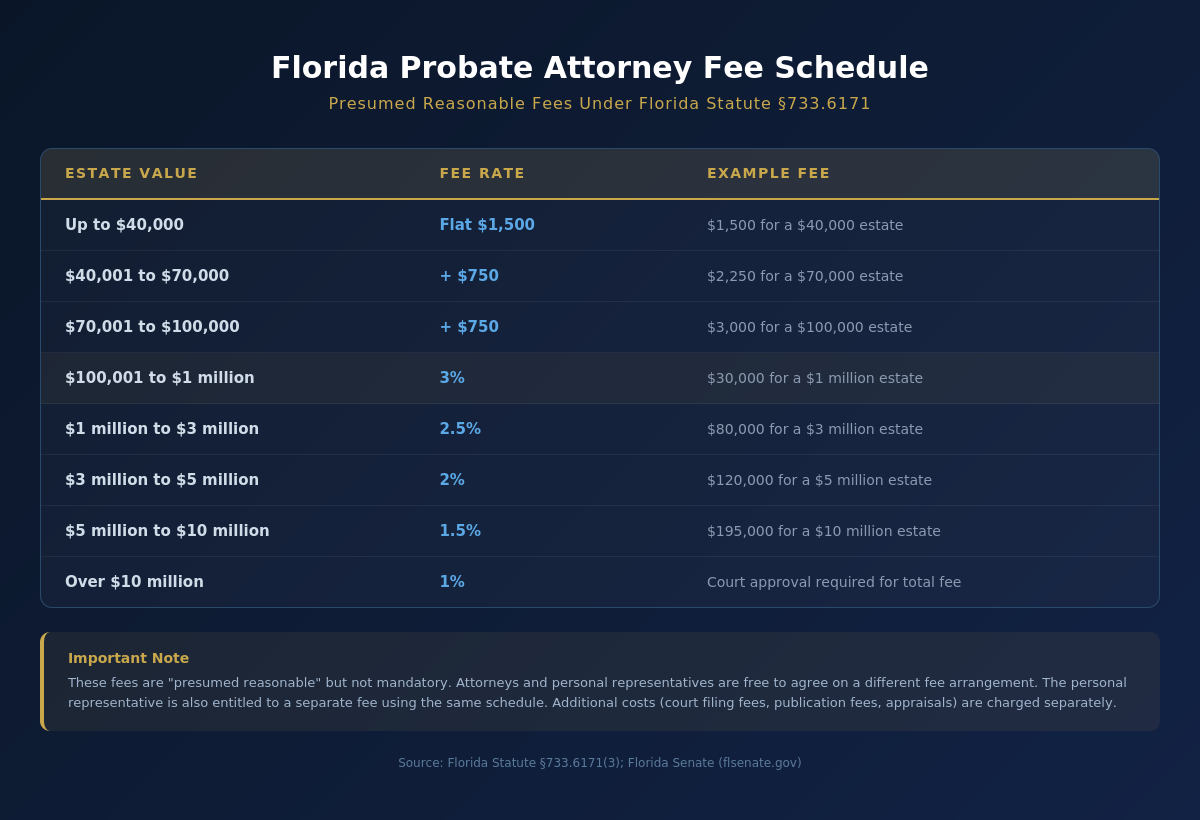 Figure 4: Florida Probate Attorney Fee Schedule Under Statute §733.6171
What Are the Additional Costs Beyond Attorney Fees?
Beyond the attorney’s fee, estates pay several other costs:
- Court filing fees: $300 to $400 in most counties
- Newspaper publication fees: $100 to $300 for creditor notice
- Personal representative compensation: Same fee schedule as attorneys
- Appraisal fees: $300 to several thousand for real estate, business interests, or collectibles
- Accounting and tax preparation fees: Vary based on complexity
- Certified copies, postage, and administrative costs: $100 to $500
Total cost example: A $500,000 Florida estate in uncontested formal administration costs approximately $15,000 to $18,000 in attorney fees alone. Add personal representative fees, court costs, and appraisals, and total expenses reach $25,000 to $35,000 (Lorenzo Law, November 2025).
How Long Does Probate Take in Florida?
The probate timeline depends on the type of administration and whether disputes or complications arise.
| Probate Type | Standard Timeline | With Complications |
| Disposition Without Administration | 2 to 4 weeks | Up to 2 months |
| Summary Administration | 1 to 3 months | 3 to 6 months |
| Formal Administration (uncontested) | 6 to 12 months | 12 to 18 months |
| Formal Administration (contested) | 12 to 24 months | 2 to 5+ years |
Figure 5: Florida Probate Timeline by Administration Type – Source: We Probate Florida, May 2025
Several factors extend the probate timeline:
- Family disputes or will contests
- Missing documents or incomplete asset inventories
- Multi-state property requiring ancillary probate
- IRS involvement (Form 706 estate tax return adds 9 to 15 months)
- Creditor claims requiring investigation or litigation
- High-volume courts in South Florida (Broward, Miami-Dade, Palm Beach) face longer processing times
How Do You Reduce or Avoid Probate in Florida?
With the right planning, you or your family avoid the cost and delay of probate entirely. Several legal tools transfer assets outside of court.
 Figure 6: Six Strategies to Reduce or Avoid Probate in Florida
What Is a Revocable Living Trust?
A revocable living trust is the most comprehensive probate avoidance tool. You transfer ownership of assets into the trust during your lifetime. You name yourself as trustee and maintain full control. At death, the successor trustee distributes assets according to the trust terms, with no court involvement.
The trust remains private, unlike a will that becomes a public record during probate. This privacy benefit matters for high-value estates and families who prefer discretion.
What Is a Lady Bird Deed?
A Lady Bird deed (enhanced life estate deed) is a Florida-specific tool that transfers your home to named beneficiaries at death. You retain complete control during your lifetime, including the right to sell, mortgage, or revoke the deed. The property avoids probate and retains its homestead protection.
Do Beneficiary Designations Avoid Probate?
Yes. Assets with properly named beneficiaries transfer directly and never enter the probate estate. This includes life insurance, retirement accounts, POD bank accounts, and TOD brokerage accounts.
Critical reminder: Review beneficiary designations after major life events (marriage, divorce, birth, death). An outdated or missing designation sends the asset straight into probate.
Does Estate Value Affect Federal Estate Taxes in Florida?
Florida does not impose a state estate tax or inheritance tax. The Florida Constitution prohibits these taxes.
Federal estate tax applies only to estates exceeding $15 million per individual ($30 million for married couples) effective January 1, 2026, under the One Big Beautiful Bill Act. Starting in 2027, this amount is indexed for inflation.
| Year | Individual Exemption | Married Couple |
| 2025 | $13.99 million | $27.98 million |
| 2026 and beyond | $15 million | $30 million |
Figure 7: Federal Estate Tax Exemption Thresholds – Source: IRS Form 706 Instructions (September 2025)
For the vast majority of Florida families, no federal estate tax is owed. The $75,000 probate threshold and the $15 million estate tax threshold are two separate issues. Even large estates that go through formal probate rarely owe federal estate tax. For more on tax implications, see our guide on tax implications for a large probate estate in Florida.
What Should You Do First If a Family Member Passes Away?
The first actions you take after a death set the tone for the entire probate process. Organized families complete probate faster and at lower cost.
Week 1 Action Steps
- Locate the original will and any trust documents
- Order 10 or more certified death certificates from the county or state
- Identify all assets: bank accounts, investments, real estate, insurance policies, retirement accounts
- Determine which assets are probate assets vs. non-probate assets
- Contact a Florida probate attorney to evaluate whether formal or summary administration applies
Week 2 to 4 Action Steps
- Gather recent account statements, property tax bills, and mortgage documents
- Identify known creditors (medical providers, credit cards, loans)
- Calculate the total value of non-exempt probate assets to determine the probate type
- File the petition for the appropriate form of administration
What Happens When an Estate Exceeds $75,000?
Estates above the $75,000 threshold enter formal administration with full court supervision. The process adds time, cost, and complexity. For families managing large probate estates in Florida, common challenges include:
- Mandatory creditor notification with a 90-day claims window
- Detailed asset inventory and court-filed valuations
- Potential IRS involvement for estates near or above the federal tax threshold
- Family disputes over asset distribution, will validity, or personal representative selection
- Multi-state property requiring ancillary probate in other jurisdictions
- Professional appraisals for real estate, businesses, and collectibles
The longer probate takes, the more it costs. Frozen assets prevent families from accessing funds to pay bills or cover expenses. Working with an experienced probate attorney from the start keeps the process on track and reduces the risk of expensive delays.
Frequently Asked Questions
1. How much does an estate have to be worth to go through probate in Florida?
An estate with more than $75,000 in non-exempt assets requires formal probate administration in Florida. Estates at or below $75,000 qualify for summary administration, a simplified and faster process. The $75,000 figure excludes exempt property like homestead, vehicles, and household furnishings.
2. What is the difference between summary administration and formal administration in Florida?
Summary administration is a simplified process for estates under $75,000 (or when the decedent died over two years ago). No personal representative is appointed. It takes 1 to 3 months and costs $1,500 to $4,500. Formal administration is the full court-supervised process for larger estates. It requires an attorney, a personal representative, and takes 6 to 18 months minimum.
3. Does a will avoid probate in Florida?
No. A will does not avoid probate. The probate court must validate the will and supervise asset distribution. Only trusts, beneficiary designations, joint ownership, and similar legal tools keep assets out of probate court.
4. What assets are exempt from probate in Florida?
Under Florida Statute §732.402, exempt assets include the decedent’s homestead property, up to two motor vehicles (under 15,000 pounds each), household furnishings up to $20,000, and qualified tuition programs. These do not count toward the $75,000 summary administration threshold.
5. How long does probate take in Florida for a large estate?
Uncontested formal administration takes 6 to 12 months. Contested estates with disputes, missing documents, or IRS involvement take 2 to 5 years or longer. Multi-state property and family conflicts are the most common causes of extended timelines.
6. How much do probate attorneys charge in Florida?
Florida Statute §733.6171 sets a presumed reasonable fee schedule. For estates up to $100,000, the fee is $3,000. For estates between $100,000 and $1 million, the rate is 3%. For estates between $1 million and $3 million, the rate drops to 2.5%. Additional costs include filing fees, publication fees, and appraisals.
7. Does Florida have an estate tax?
No. Florida does not have a state estate tax or inheritance tax. The Florida Constitution prohibits these taxes. Federal estate tax applies to estates exceeding $15 million per individual ($30 million for married couples) starting in 2026 under the One Big Beautiful Bill Act.
8. What is the fastest way to avoid probate in Florida?
The fastest methods are naming beneficiaries on financial accounts (POD/TOD designations), holding property jointly with rights of survivorship, and placing assets in a revocable living trust. These transfers happen automatically at death without court involvement.
9. What is disposition without administration in Florida?
Disposition without administration is the simplest probate process for very small estates. It applies when the estate contains only exempt property and nonexempt personal property worth less than funeral expenses and final medical bills. The court authorizes distribution through a single informal filing, typically completed in weeks.
10. Do I need a lawyer for probate in Florida?
For formal administration, yes. Florida law requires attorney representation in formal probate. There is a narrow exception: a personal representative who is the sole interested person may represent themselves (pro se) in formal administration, but this is rare. For summary administration, attorney involvement is not legally mandatory but is strongly recommended to avoid costly mistakes. For disposition without administration, you do not need a lawyer, though consulting one is advisable for any probate-related matter.
Protecting Your Family Is a Phone Call Away
Planning for your future and protecting your loved ones requires action. A single phone call to SJF Law Group ensures your wishes are followed and your family is taken care of.
We guide individuals through the probate process and handle all aspects of trust creation, administration, and settlement. When you work with the estate planning attorneys at SJF Law Group, you receive more than an estate plan. You receive clarity and confidence.
Call us at 954-580-3690 or email info@estateandprobatelawyer.com today.