

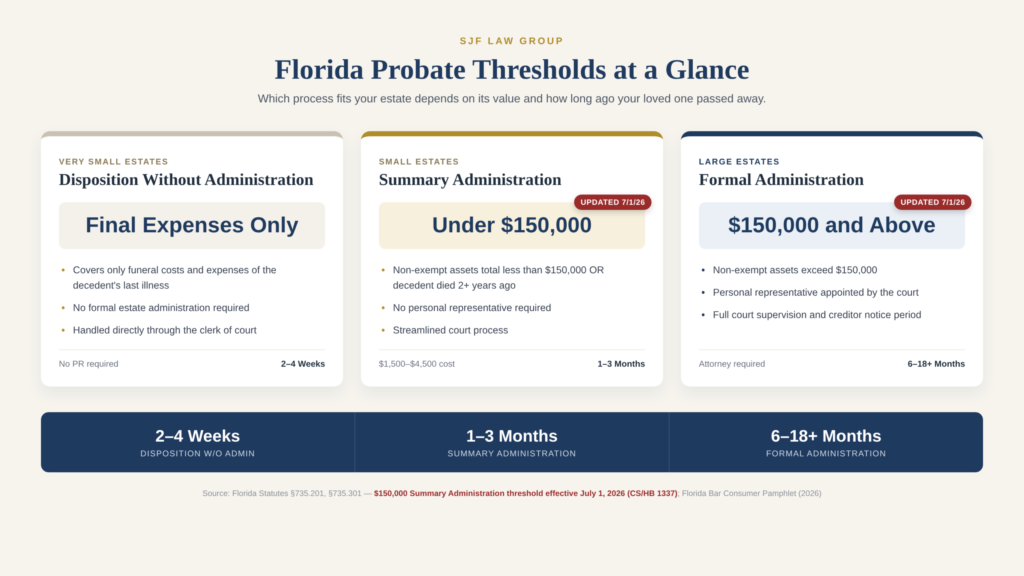
Figure 1: Florida Probate Thresholds at a Glance
There is no minimum. Any probate assets need some process. Since July 1, 2026, estates with more than $150,000 in non-exempt probate assets generally need formal administration. Smaller estates can use summary administration.
Key Takeaways
- Florida has no single dollar amount that triggers probate. The value decides which type of probate applies.
- As of July 1, 2026, estates with $150,000 or less in non-exempt probate assets can use summary administration, a faster process. The limit was $75,000 before.
- Estates above $150,000 generally need formal administration, unless the person died more than two years ago.
- Homestead, up to two personal vehicles, household furnishings up to $20,000, and 529 plans do not count toward the limit.
- Assets with a named beneficiary, joint owner, or trust ownership skip probate entirely.
- Florida has no state estate tax. The federal estate tax applies only above $15 million per person in 2026.
What Is the Probate Threshold in Florida?
The key number is $150,000. Under Fla. Stat. 735.201, as amended by CS/HB 1337 effective July 1, 2026, an estate qualifies for summary administration if the value of the entire estate subject to administration in Florida, minus property exempt from creditors’ claims, is $150,000 or less. An estate also qualifies, at any value, if the person has been dead for more than two years.
Estates above that amount generally go through formal administration, the standard court-supervised process.
The same law raised several smaller limits on July 1, 2026:
| What changed | Before July 1, 2026 | From July 1, 2026 |
|---|---|---|
| Summary administration | $75,000 | $150,000 |
| Bank accounts a bank may pay to family without a court order (735.303) | $1,000 | $2,000 |
| Income tax refunds a spouse or child may claim without probate | $2,500 | $5,000 |
| Personal property of a small intestate estate that can pass without administration | $10,000, plus funeral expenses | $20,000, plus funeral expenses |
The law does not say whether the new limits depend on the date of death or the date the case is filed. If your loved one died before July 1, 2026, ask a probate attorney which limit applies.
How Do You Calculate the Threshold?
Count only the non-exempt assets that would pass through probate in Florida. Leave out:
- Assets that pass by beneficiary designation, joint ownership with survivorship, or a trust
- Florida homestead that passes to heirs
- Exempt property for a surviving spouse or children under Fla. Stat. 732.402: household furniture, furnishings, and appliances up to $20,000 in net value; up to two personal vehicles; and 529 college savings plans, including Florida Prepaid
Example. A Florida widow leaves a homestead worth $400,000, one car worth $25,000, household goods worth $15,000, and a $120,000 bank account in her name alone with no beneficiary. The home, car, and household goods are left out of the count. Only the $120,000 account counts. Under the old $75,000 limit, the estate would have needed formal administration. Under the $150,000 limit, it qualifies for summary administration.
What Are the Three Types of Probate in Florida?
| Disposition without administration | Summary administration | Formal administration | |
|---|---|---|---|
| When it applies | Only exempt property, plus other personal property worth no more than funeral costs and the last 60 days of medical bills | Non-exempt probate assets of $150,000 or less, or death more than two years ago | Everything else |
| Personal representative | No | No | Yes |
| Creditor process | Limited | Notice to creditors may be required | Formal notice and a three-month claims period |
| Typical time | Weeks | One to three months | Usually at least six months, often about a year |
What Is Disposition Without Administration?
This is the simplest option for very small estates. Under Fla. Stat. 735.301, no formal proceeding is needed if the person left only exempt personal property and other personal property worth no more than the preferred funeral expenses and reasonable medical and hospital expenses of the last 60 days of the final illness. The court can authorize payment or transfer without appointing a personal representative.
What Is Summary Administration?
Summary administration is a shorter court process for smaller estates. It is available when non-exempt probate assets are $150,000 or less, or when the person has been dead for more than two years. No personal representative is appointed. Instead, the court enters an order distributing the assets to the people entitled to them. It usually takes one to three months. Learn more about summary administration in Florida.
What Is Formal Administration?
Formal administration is the full probate process. The court appoints a personal representative, who gathers assets, publishes a notice to creditors, pays valid debts and expenses, and distributes what is left. Because creditors generally have three months after the first publication of the notice to file claims, formal administration usually takes at least six months and often about a year. Our post on how long a personal representative has to distribute an estate walks through the timeline.
Which Assets Count Toward the Probate Threshold?
Only assets titled in the person’s name alone, with no beneficiary, joint owner, or trust. Common examples are a bank account with no payable-on-death designation, a car that is not exempt, a brokerage account in one name, and real estate other than the homestead.
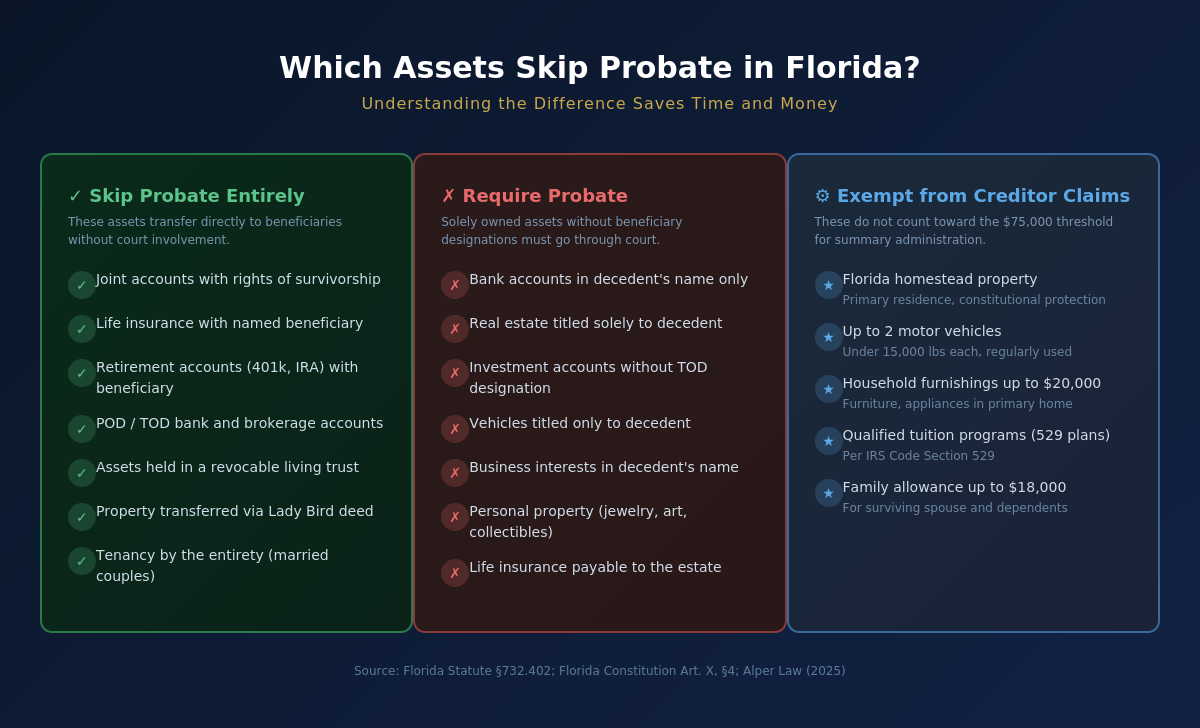 Figure 3: Which Assets Skip Probate vs. Require Probate in Florida
What Assets Skip Probate Entirely?
- Life insurance and retirement accounts with a living named beneficiary
- Payable-on-death and transfer-on-death accounts
- Property owned jointly with right of survivorship, including tenancy by the entirety
- Assets held in a revocable or irrevocable trust
- Real estate passed by a Lady Bird deed
If a named beneficiary has died, or the estate is named as beneficiary, the asset can be pulled back into probate. See are named beneficiaries enough to avoid probate?
How Much Does Probate Cost in Florida?
For formal administration, Florida sets an attorney fee that is presumed reasonable for ordinary services, based on the value of the probate estate (Fla. Stat. 733.6171):
| Probate estate value | Presumed reasonable attorney fee |
|---|---|
| Up to $40,000 | $1,500 |
| $40,000 to $70,000 | $2,250 |
| $70,000 to $100,000 | $3,000 |
| $100,000 to $1 million | 3% of the value over $100,000, added to the above |
| $1 million to $3 million | 2.5% of that portion, added to the above |
| $3 million to $5 million | 2% of that portion, added to the above |
| $5 million to $10 million | 1.5% of that portion, added to the above |
| Over $10 million | 1% of that portion, added to the above |
The attorney and personal representative can agree to a different arrangement. Personal representatives may also be paid, and extra services, such as selling real estate or handling litigation, can add fees.
What Are the Additional Costs Beyond Attorney Fees?
Expect court filing fees, newspaper publication of the notice to creditors, certified copies, and, in some estates, appraisals, accounting, and bond premiums. These vary by county and by estate.
How Long Does Probate Take in Florida?
| Type | Typical time |
|---|---|
| Disposition without administration | A few weeks |
| Summary administration | One to three months |
| Formal administration, uncontested | Usually six months to a year |
| Formal administration with an estate tax return, disputes, or real estate to sell | A year or more |
See our post on how long the probate process takes in Florida.
How Do You Reduce or Avoid Probate in Florida?
Revocable living trust. Assets titled in a trust pass to your beneficiaries without court involvement and stay private. Read about our revocable trust services.
Lady Bird deed. This Florida deed lets you keep control of your home during life and pass it to named people at death without probate.
Beneficiary designations. Naming beneficiaries on accounts and policies moves them outside probate. Review them regularly so they stay current.
Does Estate Value Affect Federal Estate Taxes in Florida?
Florida has no state estate tax. The federal estate tax applies only to estates above $15 million per person in 2026. A married couple can shelter up to $30 million combined, but it is not automatic: it takes trust planning, or an estate tax return filed after the first spouse dies to carry the unused exemption over to the survivor (called portability). Most Florida estates owe no estate tax. See Does Florida Have an Estate Tax?
What Should You Do First If a Family Member Passes Away?
Week 1: Locate the will and any trust, order several certified death certificates, and secure the home, vehicles, and valuables.
Weeks 2 to 4: Gather account statements, deeds, and policies. List debts and possible creditors. Sort assets into probate and non-probate. Add up the non-exempt probate assets to see whether the estate falls under $150,000. Then talk with a probate attorney about which process fits.
What Happens When an Estate Exceeds $150,000?
The estate generally needs formal administration. That means a personal representative must be appointed, an attorney is usually required, creditors get a formal claims period, and the court supervises the final accounting and distribution. Larger estates may also involve real estate sales, business interests, or tax filings. Learn about our large probate estate services.
How This Plays Out in Practice
These are composite examples, not actual client matters.
The account just over the old limit. A son in Margate learned that his late mother’s only probate asset was a $110,000 savings account in her name alone. Under the old $75,000 limit, the family would have needed formal administration. Because the account is under $150,000, the family was able to use summary administration instead.
The house that didn’t count. A daughter in Hollywood assumed her father’s estate was too large for summary administration because his home was worth more than $400,000. The home was his homestead and passed to his children, so it wasn’t counted. Only his checking account counted, and it was well under $150,000.
The estate that needed formal administration. A widower in Delray Beach left a brokerage account worth $300,000 and a rental condo, both in his name alone. Because the non-exempt probate assets were well over $150,000, his estate went through formal administration with a personal representative and a three-month creditor period.
When to Speak with an Estate Planning Attorney
Whether your loved one’s estate fits the new $150,000 summary administration limit or needs formal administration, SJF Law Group can guide you through the right process.
It is worth talking with a probate attorney if your loved one died before July 1, 2026, if you are not sure which assets count toward the limit, or if the estate includes real estate other than the homestead.
SJF Law Group helps families in Broward, Miami-Dade, and Palm Beach Counties with every type of Florida probate. Meetings are available in person at our Plantation office or remotely. Call (954) 580-3690 or contact us online to schedule a complimentary consultation.
Frequently Asked Questions
How much does an estate have to be worth to go through probate in Florida?
There is no minimum. Any probate assets need some process. Since July 1, 2026, estates with more than $150,000 in non-exempt probate assets generally need formal administration. Smaller estates can use summary administration.
What is the difference between summary and formal administration?
Summary administration is a shorter process with no personal representative, for estates of $150,000 or less in non-exempt assets or where the person died more than two years ago. Formal administration is the full process with a personal representative and a creditor claims period.
Does a will avoid probate in Florida?
No. A will tells the court who should receive your probate assets. A trust, beneficiary designations, and joint ownership avoid probate.
What assets are exempt from probate in Florida?
Homestead passing to heirs, household furnishings up to $20,000, up to two personal vehicles, 529 plans, and any asset with a named beneficiary, joint owner, or trust ownership.
How long does probate take for a large estate?
Usually a year or more, especially with an estate tax return, real estate to sell, or disputes.
How much do probate attorneys charge in Florida?
Florida law sets a presumed reasonable fee for formal administration: $1,500 for estates up to $40,000, $2,250 up to $70,000, $3,000 up to $100,000, then 3% of the next $900,000, with lower percentages above $1 million.
Does Florida have an estate tax?
No. Only the federal estate tax can apply, and only above $15 million per person in 2026.
What is the fastest way to avoid probate in Florida?
A funded revocable living trust, plus up-to-date beneficiary designations, is the most complete approach.
What is disposition without administration?
A simple process for estates with only exempt property and other personal property worth no more than funeral costs and the last 60 days of medical bills.
Do I need a lawyer for probate in Florida?
For formal administration, yes, in most cases. Florida requires a personal representative to have an attorney unless the personal representative is the only interested person in the estate. Summary administration petitions are also usually filed by an attorney.
About This Article
Written by Samantha Fitzgerald, Esq., founder and managing attorney of SJF Law Group. Samantha is a Florida-licensed estate planning and probate attorney, a licensed CPA, and holds an LL.M. in Taxation.
Learn more: Probate Administration
Related reading: How long the probate process takes in Florida
Ready to talk? Call (954) 580-3690 or contact us to schedule a complimentary consultation.
This post is general information, not legal advice. Every situation is different, and reading it does not create an attorney-client relationship.