


Key Takeaways: Probate in Florida
The belief that every estate must go through probate in Florida is a common misconception.
Important points to remember include:
- Probate only applies to assets titled solely in the decedent’s name
- Joint ownership can automatically transfer assets
- Beneficiary designations avoid probate entirely
- Revocable living trusts are a powerful probate-avoidance tool
- Florida offers simplified probate options for smaller estates
With proper planning, many families can minimize or completely avoid probate.
Understanding When Probate Is Required and When It Can Be Avoided
When someone passes away in Florida, many families immediately worry about probate. They may have heard stories about long court delays, expensive legal fees, and public disputes over assets.
Because of these stories, many people assume every estate must go through probate.
But that assumption is not entirely accurate.
In reality, many assets in Florida can pass to heirs without going through probate at all. With the right planning, families can often transfer property privately and efficiently.
This blog article explains when probate is required, when it can be avoided, and what options exist under Florida law.
Watch the Video: Do All Estates Have to Go Through Probate in Florida?
If you prefer a quick overview, watch our video explaining when probate is necessary and how certain assets can bypass the process.
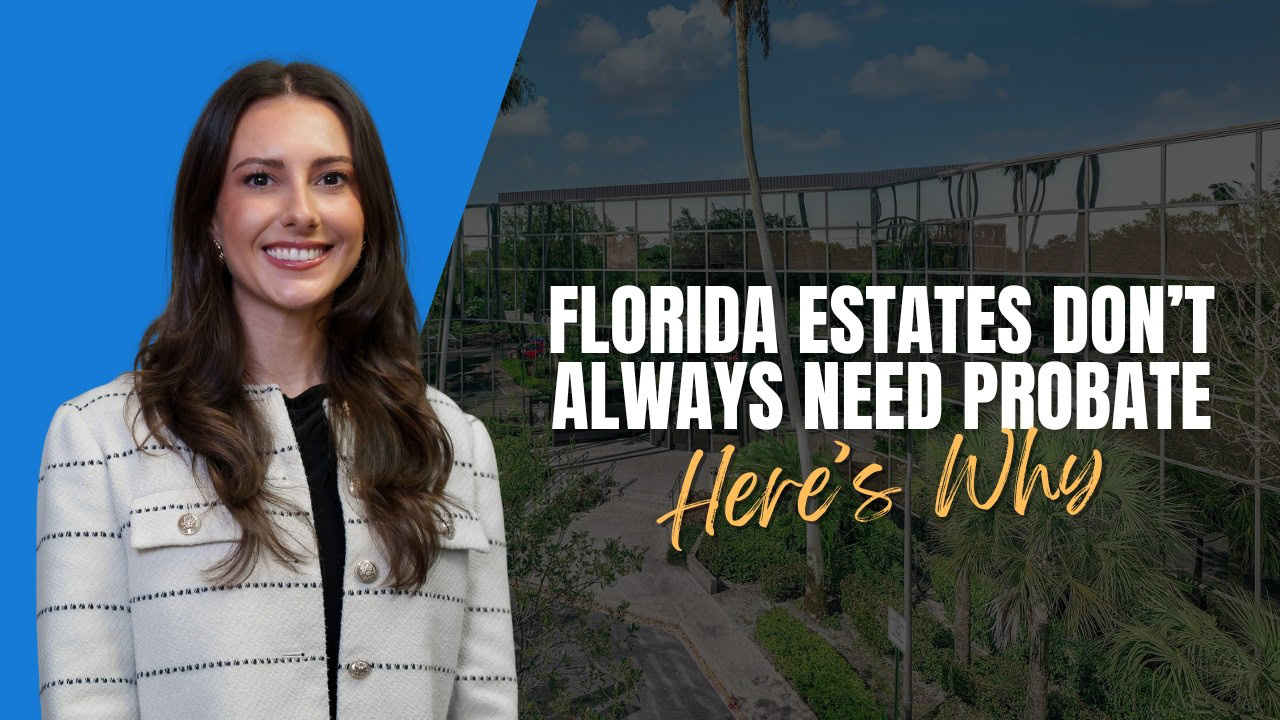
In this video, we cover:
- What probate actually is
- The types of assets that trigger probate
- Three strategies to avoid probate in Florida
- Simplified probate options for smaller estates
- What the formal probate process really looks like
For a deeper explanation, continue reading below.
What Is Probate in Florida?
Probate is a court-supervised legal process used to settle a person’s financial affairs after death.
During probate, the court oversees several steps:
- Identifying and gathering the deceased person’s assets
- Paying valid debts and taxes
- Distributing remaining property to heirs or beneficiaries
However, probate is only required for certain types of assets.
Generally, probate is triggered when property is titled solely in the deceased person’s name with no automatic transfer mechanism in place.
What Assets Typically Require Probate?
Assets often require probate if they are owned solely by the deceased person.
Examples may include:
- A house titled only in the decedent’s name
- Vehicles without joint ownership
- Bank accounts without beneficiaries
- Investment accounts without transfer instructions
- Personal property owned individually
When ownership is unclear after death, the probate court must step in to legally transfer the property to the rightful heirs.
Three Powerful Ways to Avoid Probate in Florida
The good news is that many assets can pass to heirs automatically with proper planning.
Here are three common strategies that allow assets to bypass probate.
- Joint Ownership With Rights of Survivorship
One of the simplest ways to avoid probate is through joint ownership with rights of survivorship.
When property is owned this way, ownership automatically transfers to the surviving owner when one owner dies.
In Florida, married couples often hold property as:
Tenancy by the Entirety
This form of ownership provides both probate avoidance and asset protection benefits.
When one spouse passes away, the surviving spouse automatically becomes the sole owner.
-
Naming Beneficiaries
Many financial accounts allow you to name beneficiaries who will receive the asset upon your death.
These may include:
- Life insurance policies
- Retirement accounts (401(k), IRA)
- Payable-on-death bank accounts
- Transfer-on-death investment accounts
When a beneficiary is named, the asset transfers directly to that person without probate.
-
Revocable Living Trusts
A Revocable Living Trust is one of the most comprehensive probate avoidance strategies.
With this method:
- You create a trust during your lifetime
- You transfer assets into the trust
- You retain full control as trustee
After your death, the successor trustee distributes the assets according to your instructions.
Because the trust technically owns the assets, probate is usually unnecessary.
Revocable living trusts are often used to avoid probate, maintain privacy, and streamline asset distribution.
When Probate Is Still Required
Even with planning, some estates still require probate.
This typically happens when:
- Assets are titled only in the deceased person’s name
- No beneficiaries were designated
- No trust was created
- Joint ownership was not established
When probate is required, Florida law provides several different processes depending on the size and complexity of the estate.
Summary Administration: Simplified Probate in Florida
Florida offers a faster probate option known as Summary Administration.
This process may be available when:
- The total probate estate is $75,000 or less, or
- The person passed away more than two years ago
Summary Administration typically requires less court involvement and can often be completed within a few months.
Disposition Without Administration
For very small estates with limited personal property, Florida law allows an even simpler process called Disposition Without Administration.
This option is typically used to reimburse someone who paid final expenses, such as:
- Funeral costs
- Medical bills related to the final illness
It is designed to quickly transfer minimal assets without a full probate proceeding.
What Happens in Formal Probate?
When an estate exceeds the limits for simplified probate, the estate may require Formal Administration.
Formal probate usually involves several key steps:
-
Opening the Estate
An attorney files a petition with the probate court requesting that the estate be opened.
The court then appoints a Personal Representative to manage the estate.
-
Letters of Administration
The court issues a document called Letters of Administration, which authorizes the Personal Representative to act on behalf of the estate.
This allows them to:
- Access bank accounts
- Sell property
- Pay debts
- Manage estate assets
-
Notifying Creditors
- The Personal Representative publishes a Notice to Creditors, giving creditors a limited window (usually three months) to file claims against the estate.
-
Distributing Assets
- After debts and taxes are resolved, the remaining assets are distributed to the beneficiaries.
- In many cases, formal probate takes around 8-12 months, depending on the estate’s complexity.
When to Speak with a Florida Probate Attorney
Determining whether probate is required and which process applies can be confusing during an already difficult time.
A Florida probate attorney can help families:
- Identify which assets require probate
- Determine eligibility for simplified probate procedures
- Navigate court requirements
- Create estate plans that reduce probate complications
Proper planning can save your family time, money, and unnecessary stress while ensuring your assets are distributed according to your wishes.
Proper planning can save your family time, money, and unnecessary stress while ensuring your assets are distributed according to your wishes. At SJF Law Group, our probate attorneys guide families through estates of all sizes, from modest estates to complex, high-net-worth matters, and bring advanced degrees and deep tax expertise to every case.
Contact SJF Law Group today by filling out a form here or calling (954)-580-3690.